Amazon Tests Conversational Warehouse Robots as Europe Rollout Looms
Amazon unveiled a next-generation Proteus warehouse robot that can follow plain-language worker commands. The original Proteus is used in 25 U.S. fulfillment centers, and Amazon plans a Europe rollout in the first half of 2027. The practical question is whether Amazon can expand warehouse robotics while matching automation gains with skilled fulfillment roles.
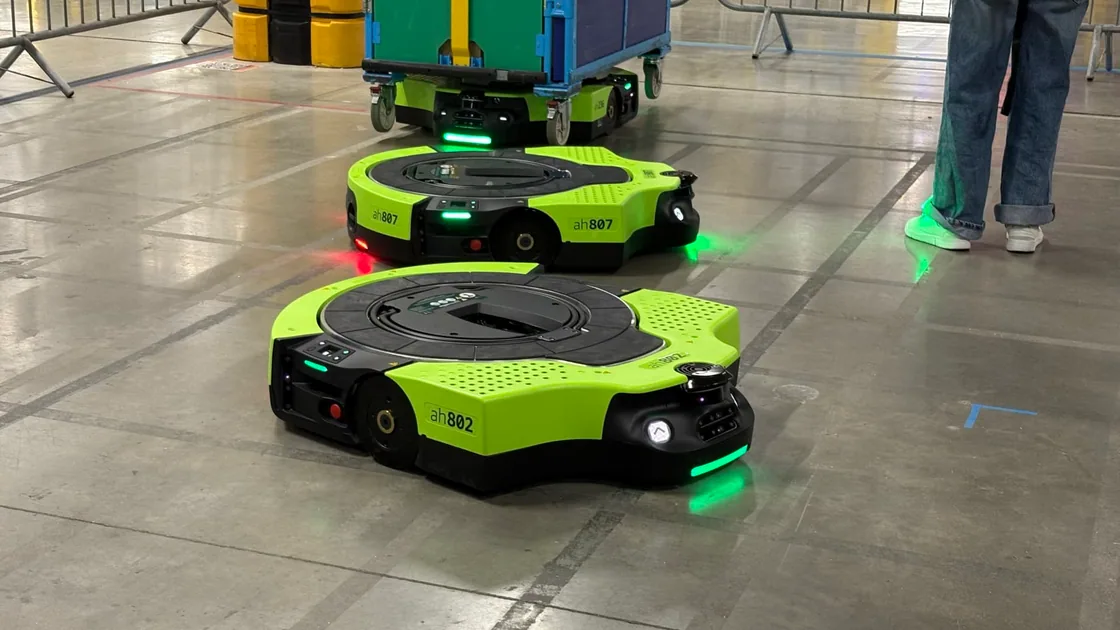
Amazon Moves Warehouse AI Into Plain-Language Control
Amazon has unveiled a next-generation Proteus warehouse robot that can understand natural-language instructions from workers and move items inside fulfillment centers.
The autonomous mobile robot debuted Thursday in London at the company's Delivering the Future event.
The product signal is practical rather than speculative.
Amazon's original Proteus has already been rolled out in 25 fulfillment centers in the U.S. after first being deployed in 2022, including work that involved moving heavy carts weighing up to 400 kilograms.
Amazon plans to bring the latest version to Europe during the first half of 2027.
The control layer is designed for everyday worker speech rather than technical prompts or a programming interface.
Amazon also said it is committing 10 billion euros, or $11.6 billion, to modernize fulfillment operations in Europe over the next few years.
Robotics Investment Meets Workforce Pressure
The launch comes as Amazon continues to cut corporate roles while naming artificial intelligence among its biggest bets.
The company cut 14,000 corporate workers in October and said it would lay off a further 16,000 workers in January to reduce layers and bureaucracy.
Andy Jassy told staff last year that AI would change the shape of Amazon's workforce.
Jassy said Amazon would need "fewer people doing some of the jobs" and "more people doing other types of jobs," while expecting a smaller total corporate workforce over the next few years.
Amazon is presenting warehouse robotics as a skills and operations story rather than only a labor-reduction story.
Tye Brady, chief technologist at Amazon Robotics, said Thursday: "Since we've invested in robotics, we've created hundreds of thousands of jobs."
Europe Becomes the Adoption Test
The Europe rollout gives Amazon a clearer test case for whether conversational warehouse robots can move from controlled deployment into broader fulfillment operations.
Other robotics advances named by the company include Vulcan, its first robot with a sense of touch, and STARK, a robotic tote handling system.
John Boumphrey, Amazon's Vice President, Country Manager for the U.K. and Ireland, said the robotics investment requires more workers inside fulfillment centers because the company is struggling to hire people with the right skills.
Boumphrey said Amazon is "going to need an awful lot of people" in warehouses and that its experience of robots has "driven up employment rather than the reverse."
The workforce question is not settled.
A separate forecast put AI robots at 1.3 billion by 2035 and more than four billion by 2050, while U.K. data showed more than one million people aged 16 to 24 were not in education, employment or training by the end of May.
The practical question is whether Amazon's European rollout can show that plain-language warehouse robots improve fulfillment operations while creating enough technician, mechatronics and training pathways for workers affected by automation.
Summary version for Medium
Amazon Tests Conversational Warehouse Robots as Europe Rollout Looms
What the announcement means beyond the headline
Quick Summary: Amazon unveiled a next-generation Proteus warehouse robot that can follow plain-language worker commands. The original Proteus is used in 25 U.S.
Amazon Moves Warehouse AI Into Plain-Language Control
Amazon has unveiled a next-generation Proteus warehouse robot that can understand natural-language instructions from workers and move items inside fulfillment centers. The autonomous mobile robot debuted Thursday in London at the company's Delivering the Future event.
Robotics Investment Meets Workforce Pressure
The launch comes as Amazon continues to cut corporate roles while naming artificial intelligence among its biggest bets.
- Point 1: The central topic is amazon, with the announcement framed around concrete operating detail.
- Point 2: The company cut 14,000 corporate workers in October and said it would lay off a further 16,000 workers in January to reduce layers and bureaucracy.
AI deployments now depend on where models, data, approvals and operating teams meet.
Europe Becomes the Adoption Test
The Europe rollout gives Amazon a clearer test case for whether conversational warehouse robots can move from controlled deployment into broader fulfillment operations. Other robotics advances named by the company include Vulcan, its first robot with a sense of touch, and STARK, a robotic tote handling system.
Read the Full Deep Dive
Want to explore the complete technical analysis, enterprise trade-offs, and detailed metrics?
Read the full article originally published at SendTech Times