Japan’s Gennai AI Push Tests Public-Sector Guardrails For Diet Answers
Japan’s government is using its in-house generative AI system Gennai to help prepare Diet answer documents as officials defend the workflow against criticism. Digital Minister Matsumoto said Gennai can identify related systems and past answers, while staff still revise outputs and check facts before material reaches the minister. The practical question is whether the tool reduces late-night bureaucratic work without turning parliamentary answers into unchecked AI output.
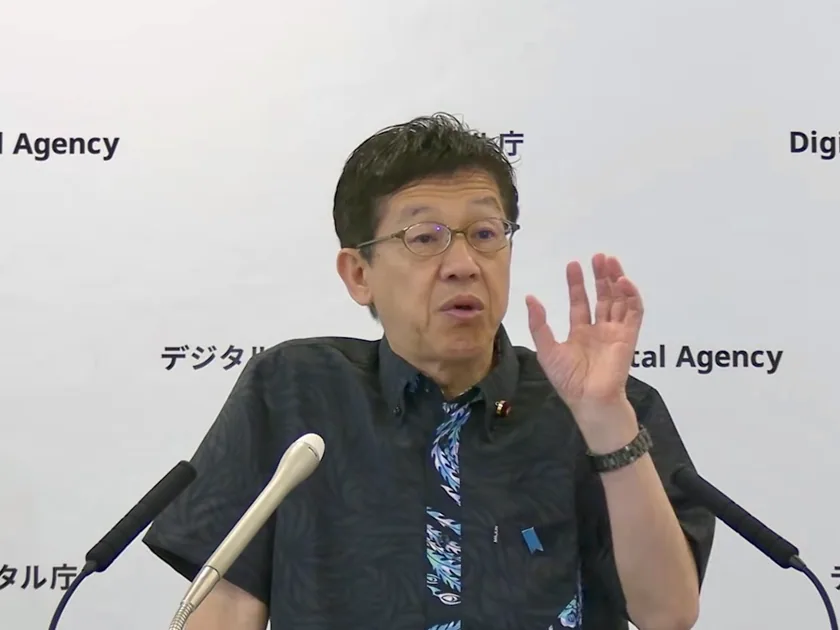
Japan’s government is moving generative AI deeper into parliamentary administration, using its in-house system Gennai to support the preparation of Diet answer documents while insisting that ministers and officials remain accountable for the final response.
Digital Minister Matsumoto explained the approach at a June 2 press conference after criticism of the plan appeared in a May 31 editorial.
He said the government is using Gennai, a generative AI system built internally by the Digital Agency for government use, to reduce the workload on national public servants.
Gennai Moves From Back-Office Tool To Answer Drafting
The work includes Diet answer preparation.
Matsumoto said the Digital Agency is actively using Gennai not only for supporting information searches but also for the output stage of answer-document creation.
He said the system had already been used to prepare answers for recent committee and plenary sessions.
Gennai’s role is to identify systems related to a question, surface past answers and, in some cases, create the structure of a draft answer.
The government also plans to strengthen the system by collecting and organizing large shared government datasets, including official gazettes, laws, white papers and statistics.
Matsumoto pushed back against the idea that Gennai simply produces answers from public internet material.
He said that, as a general statement, generative AI can be based on existing internet information, but Gennai is not creating its output only from the internet.
Human Review Remains The Policy Boundary
The minister’s core defense was procedural rather than promotional.
After Gennai produces output, staff do not pass it directly to the minister.
They revise the draft, check detailed facts and then deliver the material for ministerial use.
Matsumoto said, “AIが作ったものをそのままアウトプットすることはできる限り控える,” explaining that the government should avoid outputting material created by AI as-is wherever possible.
He also said that if material created by Gennai were to be used directly, it would need even more detailed checking.
He drew a distinction between reading prepared answers in plenary sessions and speaking in committee meetings.
In committees, he said, he does not simply read out material but speaks in his own words.
Workload Pressure Keeps The System In Play
The controversy also points to a practical pressure inside the bureaucracy.
Matsumoto welcomed the editorial’s argument that officials’ burden should be reduced by having lawmakers submit questions earlier.
He said questions sometimes arrive at around 6 p.m. to 7 p.m., after which officials must prepare answer documents.
Even with Gennai, the work can continue until late at night.
Matsumoto also agreed with the concern that parliamentary debate would lose meaning if both the questioner and the answering side relied on AI.
His position is that Gennai should become accurate enough to support answer preparation, while ministers should still avoid presenting AI output unchanged and answer in their own words.
For public-sector technology buyers, the article-specific signal is governance rather than model capability.
The next signal is whether Gennai’s use becomes a controlled workload tool, supported by verified government data and human review, or becomes a flashpoint over accountability in parliamentary debate.
Summary version for Medium
Japan’s Gennai AI Push Tests Public-Sector Guardrails For Diet Answers
What the announcement means beyond the headline
Quick Summary: Japan’s government is using its in-house generative AI system Gennai to help prepare Diet answer documents as officials defend the workflow against criticism. Digital Minister Matsumoto said Gennai can identify related systems and past answers, while staff still revise outputs and check facts before material reaches the minister.
Gennai Moves From Back-Office Tool To Answer Drafting
The work includes Diet answer preparation. Matsumoto said the Digital Agency is actively using Gennai not only for supporting information searches but also for the output stage of answer-document creation.
Human Review Remains The Policy Boundary
The minister’s core defense was procedural rather than promotional.
- Point 1: The central topic is japan, with the announcement framed around concrete operating detail.
- Point 2: After Gennai produces output, staff do not pass it directly to the minister.
AI deployments now depend on where models, data, approvals and operating teams meet.
Workload Pressure Keeps The System In Play
The controversy also points to a practical pressure inside the bureaucracy. Matsumoto welcomed the editorial’s argument that officials’ burden should be reduced by having lawmakers submit questions earlier.
Read the Full Deep Dive
Want to explore the complete technical analysis, enterprise trade-offs, and detailed metrics?
Read the full article originally published at SendTech Times