Artificial Intelligence News Updates: Latest News About Google AI, OpenAI, ChatGPT, Gemini, Lamda and More
Pope Leo XIV is set to release a manifesto on artificial intelligence titled 'Magnificent Humanity'. The document aims to tackle ethical and social challenges posed by rapid AI development. This release follows years of study by the Church on AI-related technologies.

Pope Leo XIV's AI Manifesto
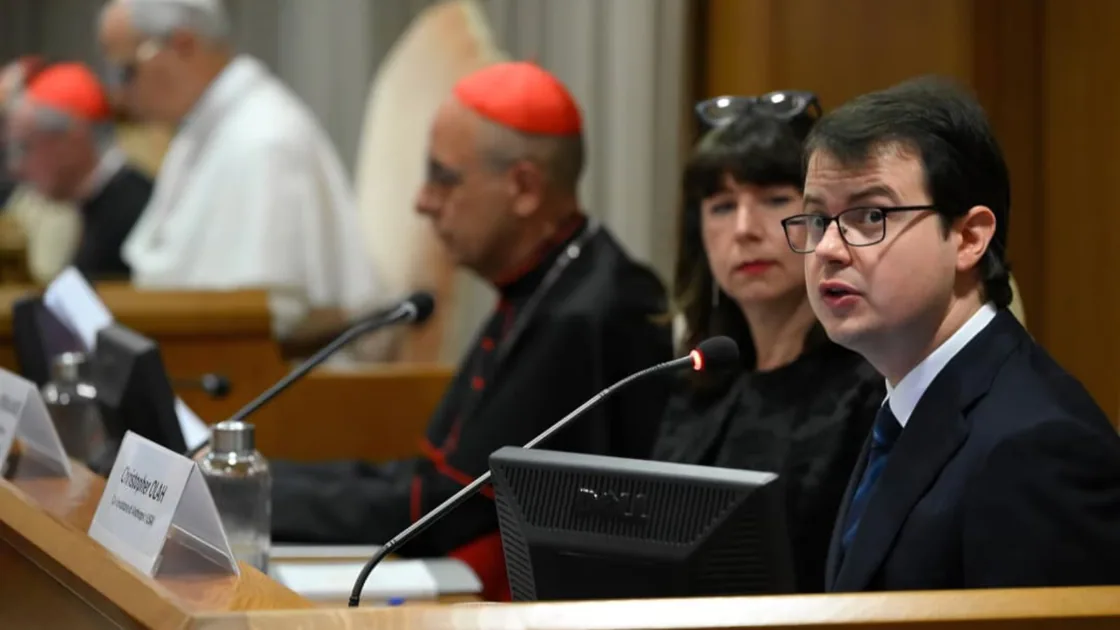
Pope Leo XIV will release his long-awaited manifesto on artificial intelligence (AI) on Monday.
The document, titled "Magnificent Humanity," aims to address the ethical and social challenges that arise as AI technology rapidly develops worldwide.
This initiative follows several years of study conducted by the Church regarding AI-related technologies.
McKinsey's Insights on AI Competition
According to a report by McKinsey & Company, companies can no longer gain a competitive edge using standard AI models, as nearly 90% of organizations are now utilizing large language models.
The true advantage lies in developing unique, integrated AI systems and workflows that are difficult for rivals to replicate.
This shift is transforming cognitive work into scalable infrastructure, which is essential for maintaining a competitive position in the market.
Huawei's Advanced Chip Design
In other news, Huawei is aiming for advanced chip design by 2031.
The company is working on a new 'Tau Scaling Law' to enhance chip performance, potentially allowing it to bypass US sanctions that limit access to new semiconductor technology.
Huawei's upcoming Kirin chips will incorporate a related 'LogicFolding' architecture, with hundreds of chips already produced based on this innovative principle.
Economic Growth Driven by AI Chip Demand
Singapore's economy has surged six percent in the first quarter, largely driven by the demand for artificial intelligence chips.
This economic boost is helping to balance challenges stemming from the conflict in the Middle East.
The government has maintained its annual economic forecast, highlighting strong performance in the trade, manufacturing, and finance sectors.
Summary version for Medium
Artificial Intelligence News Updates: Latest News About Google AI, OpenAI, ChatGPT,...
What the announcement means beyond the headline
Quick Summary: Pope Leo XIV is set to release a manifesto on artificial intelligence titled 'Magnificent Humanity'. The document aims to tackle ethical and social challenges posed by rapid AI development.
Pope Leo XIV's AI Manifesto
Pope Leo XIV will release his long-awaited manifesto on artificial intelligence (AI) on Monday. The document, titled "Magnificent Humanity," aims to address the ethical and social challenges that arise as AI technology rapidly develops worldwide.
McKinsey's Insights on AI Competition
According to a report by McKinsey & Company, companies can no longer gain a competitive edge using standard AI models, as nearly 90% of organizations are now utilizing large language models.
- Point 1: The central topic is science-tech, with the announcement framed around concrete operating detail.
- Point 2: The true advantage lies in developing unique, integrated AI systems and workflows that are difficult for rivals to replicate.
The important shift is not the AI label, but the operating boundary it creates for teams.
Huawei's Advanced Chip Design
In other news, Huawei is aiming for advanced chip design by 2031. The company is working on a new 'Tau Scaling Law' to enhance chip performance, potentially allowing it to bypass US sanctions that limit access to new semiconductor technology.
Read the Full Deep Dive
Want to explore the complete technical analysis, enterprise trade-offs, and detailed metrics?
Read the full article originally published at SendTech Times