Policy
REGULATION WATCH:

Taiwan AI Chip Control Plan Tests Asia's Semiconductor Enforcement Gap

Newsroom brief

Taiwan is weighing stricter AI chip export controls that could criminalize smuggling of Nvidia-class hardware to China, raising compliance pressure on server assemblers and deepening Asia's split over US-aligned semiconductor enforcement.
Verified against source materialEdited by SendTech Times Chips & Compute Desk
Taiwan AI Chip Control Plan Tests Asia's Semiconductor Enforcement Gap
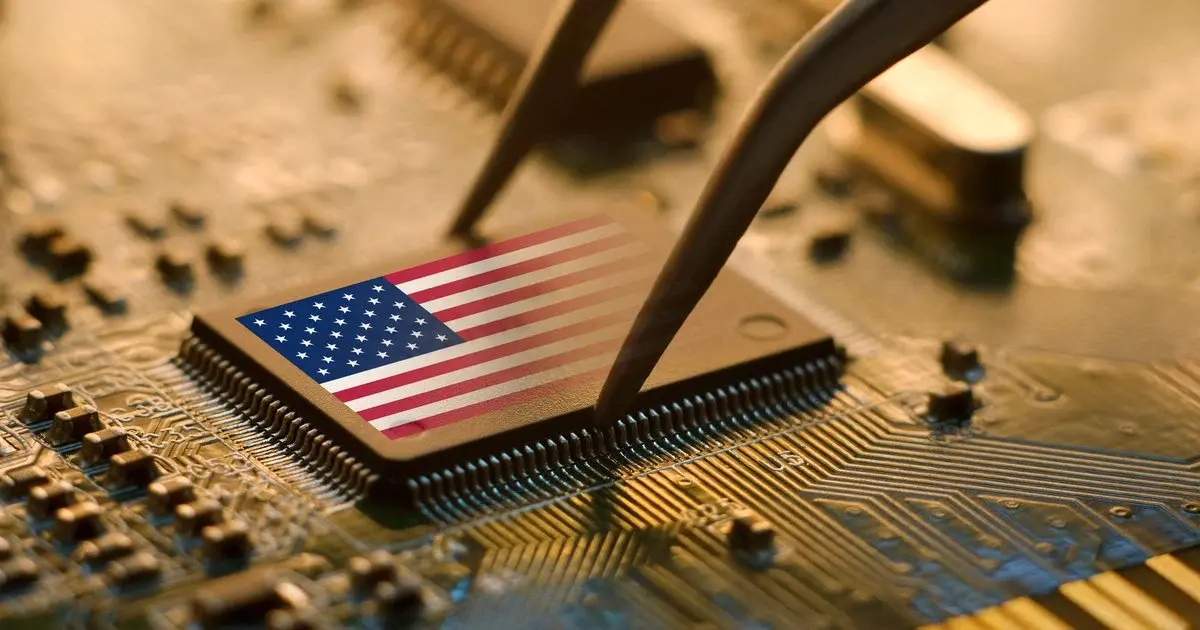
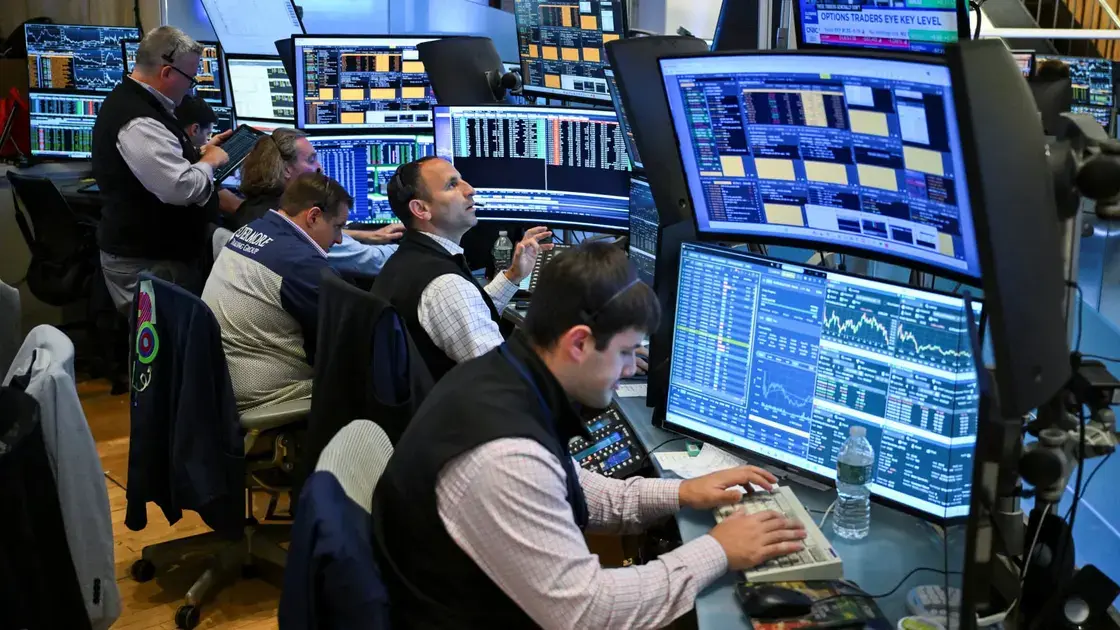
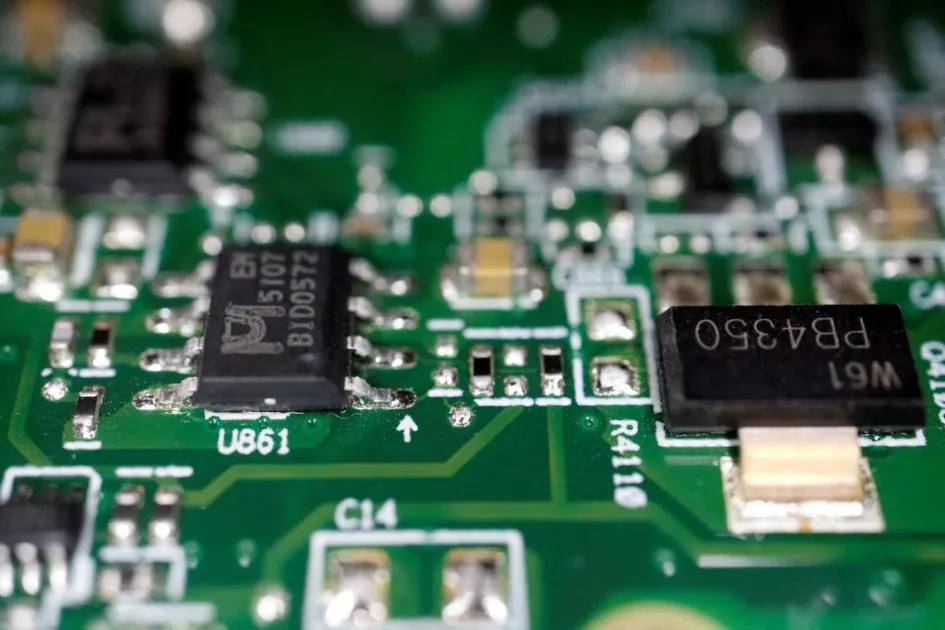
Image source: Straitstimes

Taiwan AI Chip Control Plan Tests Asia's Semiconductor Enforcement Gap

Taiwan Weighs A Wider AI Chip Gate

Taiwanese authorities are considering a stricter export-control framework that would curb AI chip sales to China and make illegal diversion of advanced hardware easier to prosecute.

The proposal would move Taiwan closer to the United States' chip-control model, which has restricted certain advanced Nvidia processors since 2022 unless companies receive Washington's permission.

The practical change would be significant.

Taiwan currently warns potential sellers that unauthorized AI chip exports to China may breach US rules, but the island does not treat those exports as a standalone local criminal offense.

Suspected cases therefore have to be pursued through other statutes, such as document-falsification charges, which narrows the legal path for enforcement.

Smuggling Risk Moves From Compliance To Criminal Law

The policy discussion follows Taiwan's first known detentions of alleged AI chip smugglers in May.

Taipei officials are now weighing controls that would restrict sales to all customers in China, rather than only companies already named on export blacklists such as Huawei Technologies.

If adopted, the change would allow prosecutors to treat AI chip smuggling to China as a criminal violation for the first time.

The measure remains unfinished.

Taiwan has directionally agreed to follow the US approach, but officials still need to settle the processing-power threshold, the legal scope, and the final text before senior officials review any deal.

The Ministry of Economic Affairs said Taiwan will keep strengthening oversight of strategic high-tech goods and continue consultations with the United States over whether advanced chips should be brought under regulatory control.

Server Makers Face A Tighter Oversight Burden

A broader control regime would put more pressure on Taiwan's AI server supply chain, especially companies that assemble Nvidia-based systems for global customers.

Gigabyte Technology and Asustek Computer were named in the source as examples of firms that could face stronger oversight expectations.

Their shares fell as much as 3.2 per cent and 4.4 per cent, respectively, in Taipei trading on June 10.

The issue extends beyond individual component sales.

Taiwan sits at the center of AI chip manufacturing and server assembly, while Chinese buyers remain a major enforcement concern for Washington.

The source does not accuse Taiwanese companies of wrongdoing, but it shows why compliance risk is moving deeper into the manufacturing and distribution chain.

Regional Enforcement Is Becoming Uneven

Taiwan's debate also highlights a broader Asian policy split.

Malaysia agreed in 2025 to match US restrictions on AI processors as part of a wider trade arrangement, but the status of implementation remains unclear.

Singapore has not signaled a plan to impose its own AI chip controls and has instead pursued diversion cases through existing local laws.

That leaves Taiwan testing a harder line at a sensitive moment.

Stricter rules could reinforce its technology-security alignment with Washington, but they could also trigger a response from Beijing and create new compliance costs for a sector central to Taiwan's equity market and industrial policy.

The next watchpoint is whether Taipei converts the current consultation into a signed rule that defines which AI chips, servers, and China-linked customers fall under criminal export-control enforcement.

Share this article
inXf

Related articles

More
Warren Hearing Request Puts Nvidia China Chip Sales Under Export-Control Scrutiny
Chips & Semiconductors

Warren Hearing Request Puts Nvidia China Chip Sales Under Export-Control Scrutiny

Sen. Elizabeth Warren invited Nvidia CEO Jensen Huang to testify before the Senate Banking Committee on June 11 over China chip sales and export controls. The request focuses on Nvidia's views on U.S. export control laws and its business in China as lawmakers scrutinize advanced AI chip flows. The next signal is whether Huang appears and gives senators enough detail on Nvidia's China strategy and national-security posture.

US Export-Control Shift Opens UAE AI Chip Access, DCD Reports
Chips & Semiconductors

US Export-Control Shift Opens UAE AI Chip Access, DCD Reports

Data Center Dynamics reported that the US government has moved the UAE into a lower-restriction export-control category, giving UAE companies broader access to advanced AI chips from Nvidia and AMD. The account names G42 and hyperscaler data-centre projects, but it does not list chip volumes, approved licences or specific UAE projects.

Groq Raises $650 Million As Its AI Chip Story Turns Toward Neocloud Scale
Chips & Semiconductors

Groq Raises $650 Million As Its AI Chip Story Turns Toward Neocloud Scale

Groq announced a $650 million round after Nvidia licensed its technology and hired senior leaders, leaving the AI chip company to rebuild around a neocloud business spanning 13 data centers.

Nvidia Says Smuggled AI Data Centers Are A Dead End
Chips & Semiconductors

Nvidia Says Smuggled AI Data Centers Are A Dead End

Jensen Huang told Nvidia shareholders that national security comes first and said export-restricted AI data centers built from smuggled parts would lack the support needed to operate.

Nvidia 6G Radio Chip Plan Moves AI-RAN Into Telecom Edge
Chips & Semiconductors

Nvidia 6G Radio Chip Plan Moves AI-RAN Into Telecom Edge

Nvidia is working on a GPU-based chip for 6G radio units, extending AI-RAN into low-PHY radio processing while power, supplier integration and RAN spending remain the key tests.

Huawei's Tau scaling puts architecture at the center of China's AI-chip push
Chips & Semiconductors

Huawei's Tau scaling puts architecture at the center of China's AI-chip push

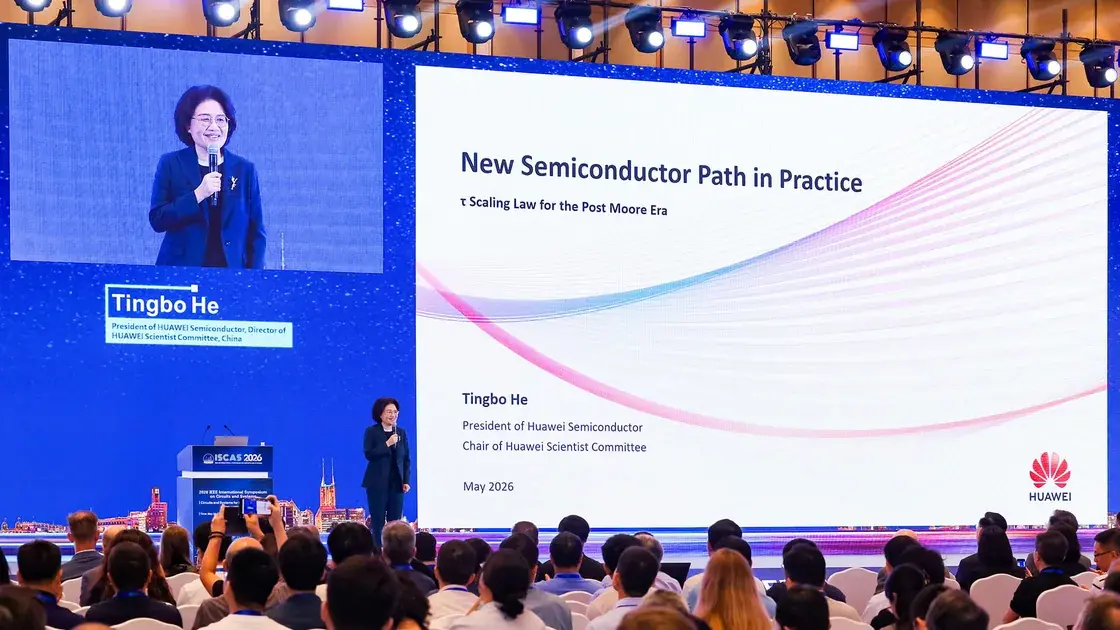
Huawei proposed Tau scaling, a framework focused on shorter signal paths rather than only smaller transistors. LogicFolding is planned for Kirin chips in fall and winter 2026, with Huawei claiming a density jump to 238 million transistors per square millimeter. The test is whether architecture-led gains can be validated in commercial chips amid export-control limits on advanced tools.

ASML Raises 2026 Sales Forecast As AI Chip Orders Lift Capacity Plans
Chips & Semiconductors

ASML Raises 2026 Sales Forecast As AI Chip Orders Lift Capacity Plans

ASML said 2026 sales should now reach 43 billion euros to 45 billion euros after stronger AI-chip equipment demand, up from its earlier 36 billion euro to 40 billion euro range. The company also targeted 30% additions to 2026 low NA EUV and DUV immersion capacity, but it did not name customer order volumes or ramp dates.

Nvidia ‘likely the most concerned’ as Huawei bets on new chip architecture law
Chips & Semiconductors

Nvidia ‘likely the most concerned’ as Huawei bets on new chip architecture law

Huawei says its new Tau Scaling Law could support transistor density equivalent to a 1.4-nanometre process in high-end chips by 2031. Analysts said the move could weaken US-led export-control leverage as China pushes semiconductor self-sufficiency under sanctions. Omdia said Nvidia is likely the most concerned, while Chinese state media cast the effort as a technological Long March.

Keep Reading

More Stories

Latest
Upstart Bank Charter Approval Leaves Fed And FDIC Steps PendingFintech & Digital PaymentsJul 25, 2026Upstart Bank Charter Approval Leaves Fed And FDIC Steps PendingUpstart received conditional OCC approval to form a national bank, but the AI lending marketplace still needs deposit-insurance and bank-holding-company approvals before the charter can operate.US Tech Letter Warns Against Broad Open-Weight AI RestrictionsCapital & PolicyJul 25, 2026US Tech Letter Warns Against Broad Open-Weight AI RestrictionsCNBC coverage identified Nvidia, Microsoft, Meta, Palantir and more than 20 other companies urging policymakers to avoid broad restrictions on open-weight AI models as Chinese systems and distillation claims draw White House scrutiny.Ajman Uses Agentic AI For Headless Trade Licence RenewalAIJul 25, 2026Ajman Uses Agentic AI For Headless Trade Licence RenewalEconomy Middle East reported that Ajman completed the UAE’s first government transaction to renew a trade licence using Agentic AI, starting with AjmanOne notifications, cross-entity lease checks and a headless service model.Bond Investors Price AI Capex As Credit RiskCapital & PolicyJul 25, 2026Bond Investors Price AI Capex As Credit RiskCNBC reported that bond-market anxiety is rising around AI capital spending, with hyperscaler spreads widening, Oracle CDS trading at a multi-year high and Meta data-center financing facing higher borrowing costs.OCC Denies Wise Trust Bank Charter Over AML DeficienciesCapital & PolicyJul 25, 2026OCC Denies Wise Trust Bank Charter Over AML DeficienciesThe Office of the Comptroller of the Currency denied Wise’s national trust bank application after citing AML and governance concerns, leaving the fintech to rebuild its U.S. charter plan under a GENIUS Act framework.OpenAI Connects ChatGPT To Apple Health And Medical RecordsAIJul 25, 2026OpenAI Connects ChatGPT To Apple Health And Medical RecordsAI News reported that OpenAI is adding a Health feature to ChatGPT, allowing eligible users to connect Apple Health data and supported medical records while keeping the product framed as support rather than diagnosis.ADIB Tests Visa Threat Intelligence Before Payment FraudFintech & Digital PaymentsJul 25, 2026ADIB Tests Visa Threat Intelligence Before Payment FraudA joint ADIB-Visa announcement covered by Economy Middle East identified Abu Dhabi Islamic Bank as the first bank globally to deploy Visa’s threat-intelligence platform, moving cyber-risk data closer to payment-fraud prevention while external performance evidence remains limited.US Visa Restrictions Extend Cyber Scam Crackdown To Family MembersCapital & PolicyJul 24, 2026US Visa Restrictions Extend Cyber Scam Crackdown To Family MembersThe State Department is using visa restrictions against people linked to cyber-enabled scams and sextortion, with CyberScoop reporting that immediate family members can also face limits under the new policy.Dubai Commercial Property Sales Reach $5.31 Billion In H1EconomyJul 24, 2026Dubai Commercial Property Sales Reach $5.31 Billion In H1W Capital Real Estate Brokerage said Dubai Land Department data put first-half 2026 commercial property sales at AED19.5 billion, or $5.31 billion, across 3,415 deals, already above the full-year 2025 total.Warren Asks GAO To Review CFTC Staff Cuts As Crypto Duties GrowCapital & PolicyJul 24, 2026Warren Asks GAO To Review CFTC Staff Cuts As Crypto Duties GrowBanking Dive placed the CFTC's staffing decline at 25% after Sen. Elizabeth Warren asked the GAO to examine staff cuts, as prediction markets and crypto legislation expand the regulator's remit.Nvidia Opens Medical Simulation Framework For Healthcare Robot TrainingAIJul 24, 2026Nvidia Opens Medical Simulation Framework For Healthcare Robot TrainingNvidia's open-source Medical Physics Simulation framework is designed to generate training environments for healthcare robotics, while the named adopter list does not include a patient-side deployment.Selfie Video Recovery Gives Google Accounts A New Login PathCybersecurityJul 24, 2026Selfie Video Recovery Gives Google Accounts A New Login PathGoogle is adding opt-in selfie video account recovery while keeping Workspace, child and Advanced Protection accounts outside the feature, giving consumer users another login path tied to facial verification controls.