NVIDIA Frames Robotaxi Expansion As A Safety-Stack Problem, Not Just An AI Model Race
NVIDIA’s Halos OS pitch links new robotaxi programs in Munich, Taiwan, Southeast Asia and Saudi Arabia to certified software, standardized interfaces, guardrails and validation infrastructure.

Robotaxi Growth Puts The Safety Stack Under Scrutiny
NVIDIA is using its Halos Operating System message to argue that robotaxi deployment cannot rest only on better perception models or more capable driving decisions.
The company’s framing is that autonomous fleets need a production safety foundation that can isolate faults, verify system boundaries and support validation before vehicles operate on public roads.
The timing is tied to a wider robotaxi push.
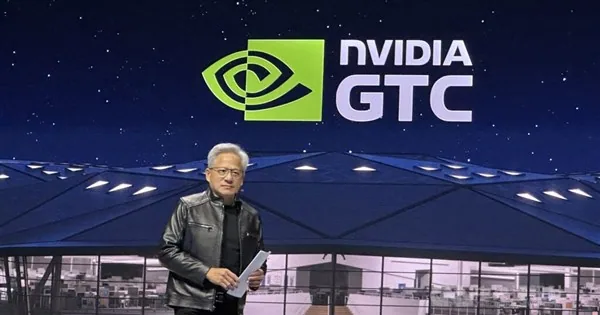
New collaborations highlighted at NVIDIA GTC Taipei include Uber and Autobrains in Munich, Foxconn in Taiwan, VinFast with Autobrains for Southeast Asia, and HUMAIN for Saudi Arabia.
Those programs give the announcement a geographic spread across Europe, Asia and the Middle East rather than a single-city pilot narrative.
Halos OS Turns Safety Into A Layered Architecture
The Halos OS package is presented as part of NVIDIA’s broader Halos safety system and is built on NVIDIA DRIVE Hyperion.
Its first layer, Halos Core, is positioned as the successor to NVIDIA DriveOS, with certification against automotive safety requirements.
The system uses a hypervisor to keep safety-critical functions separated, reducing the chance that a software fault can propagate into vehicle controls.
NVIDIA also says Halos Core is compliant with ASIL D and includes safety-certified support for NVIDIA CUDA and TensorRT.
For developers, That matters here because the safety argument is being attached to the computing stack itself, not treated as a late-stage compliance wrapper added after autonomy software is built.
Interfaces And Guardrails Are The Commercial Constraint
Robotaxis combine cameras, radar, lidar and other sensors that produce data in different formats and timing patterns.
Halos SDK is meant to reduce that integration burden through sensor abstraction and vehicle abstraction layers, while also providing a deterministic scheduler, zero-copy inter-process communication, error handling and scenario recording.
The application layer addresses a different risk: AI systems that perform well but still need bounded behavior.
NVIDIA says Halos Applications uses deterministic, rule-based functions and includes active-safety capabilities such as automatic emergency braking, lane departure warning, blind spot monitoring and collision warning.
It can also work with end-to-end AI models, including the Alpamayo family for autonomous vehicle development.
Validation Becomes The Harder Proof Point
Halos Infra covers cloud-side development for training, simulation and validation at scale.
NVIDIA says the Halos Safety Evaluation Framework supports safety-case development from L2 driver assistance to L4 robotaxis.
It cites more than 330 research papers and 1,000 patents as part of the Halos OS base behind that framework.
The announcement proves that NVIDIA is positioning robotaxi safety as a full lifecycle architecture, from data-center training and simulation to in-vehicle inference.
It does not prove that the listed fleets have cleared local regulators, reached commercial scale or delivered safety performance in public service.
The next test is whether these regional robotaxi programs can turn the stack into auditable deployment evidence.
Summary version for Medium
NVIDIA Frames Robotaxi Expansion As A Safety-Stack Problem, Not Just An AI Model Race
What the announcement means beyond the headline
Quick Summary: NVIDIA’s Halos OS pitch links new robotaxi programs in Munich, Taiwan, Southeast Asia and Saudi Arabia to certified software, standardized interfaces, guardrails and validation infrastructure.
Robotaxi Growth Puts The Safety Stack Under Scrutiny
NVIDIA is using its Halos Operating System message to argue that robotaxi deployment cannot rest only on better perception models or more capable driving decisions. The company’s framing is that autonomous fleets need a production safety foundation that can isolate faults, verify system boundaries and support validation before vehicles operate on public roads.
Halos OS Turns Safety Into A Layered Architecture
The Halos OS package is presented as part of NVIDIA’s broader Halos safety system and is built on NVIDIA DRIVE Hyperion.
- Point 1: The central topic is robotaxis, with the announcement framed around concrete operating detail.
- Point 2: Its first layer, Halos Core, is positioned as the successor to NVIDIA DriveOS, with certification against automotive safety requirements.
AI deployments now depend on where models, data, approvals and operating teams meet.
Interfaces And Guardrails Are The Commercial Constraint
Robotaxis combine cameras, radar, lidar and other sensors that produce data in different formats and timing patterns. Halos SDK is meant to reduce that integration burden through sensor abstraction and vehicle abstraction layers, while also providing a deterministic scheduler, zero-copy inter-process communication, error handling and scenario recording.
Read the Full Deep Dive
Want to explore the complete technical analysis, enterprise trade-offs, and detailed metrics?
Read the full article originally published at SendTech Times